Affiliate disclosure
Retailer links appear only after the exact configuration, seller, price context, warranty, and availability have been checked. Any compensated relationship will be clearly disclosed.
What works
- Strong fit for the workload described in this review.
- Spec table and alternatives make the buying tradeoffs easier to compare.
- Affiliate CTA stays gated until product details are verified.
Watch-outs
- Exact price, stock, cooling, PSU, and warranty still need final verification.
- May not be the best value if a rival tower has stronger standard parts.
- Upgrade path depends on the exact motherboard, case, and power supply.
Linux readiness
Linux readiness pending driver, firmware, and vendor-support checks.
Power and cooling
Power, cooling, thermals, acoustics, and PSU headroom still need exact-configuration verification.
Before we recommend it
Verification Gates
Price and stock should be rechecked against the exact retailer SKU before any buy button is published.
- Socket/platform
- Motherboard cost
- DDR5 cost
- Cooler support
- Power limits
- Game type
- GPU pairing
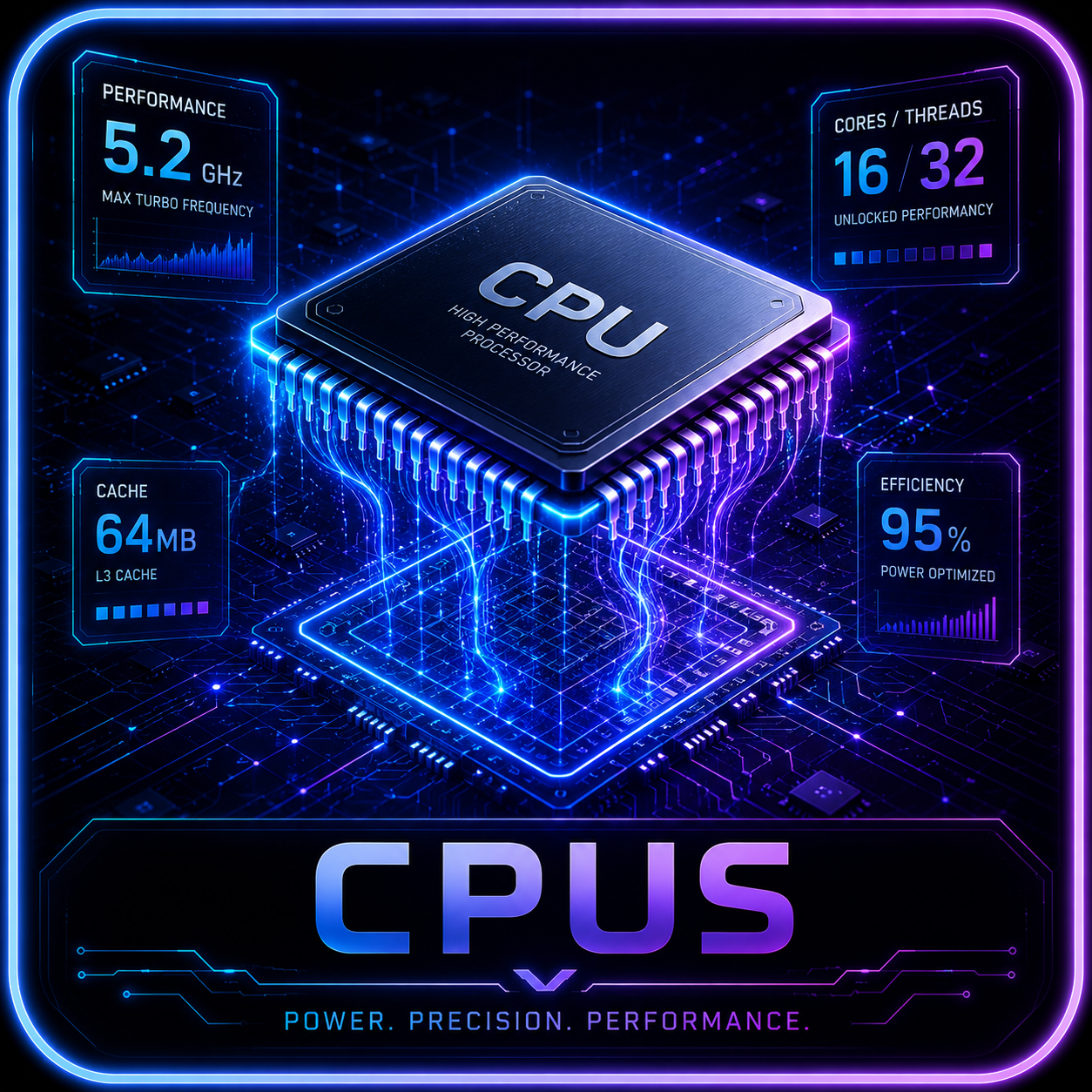
Best CPUs for Gaming (2026): Choosing the Right Processor for Performance and Value
The processor is one of the most important components in any gaming PC, but it is also one of the most misunderstood. Many buyers assume they need the fastest CPU available, only to discover later that their graphics card, monitor, or game selection limits performance far more than the processor.
The reality is that the best gaming CPU is not always the most expensive one. The right choice depends on your gaming resolution, refresh rate, creator workloads, upgrade plans, motherboard platform, and overall system budget.
This guide focuses on practical buying advice rather than chasing benchmark numbers, helping gamers choose the processor that delivers the best real-world value.
Quick Verdict
The best CPU for gaming is the one that matches your workload and hardware goals.
For many gamers:
- High-refresh esports players benefit from stronger CPUs.
- 1440p and 4K gamers often benefit more from investing in a better GPU.
- Content creators may need additional cores and threads.
- Budget builders should prioritize balanced systems rather than overspending on the processor.
Before upgrading, determine whether your gaming performance is actually CPU-limited.
Best Starting Points
Best Pure Gaming CPU
For gamers focused almost entirely on gaming performance:
- AMD Ryzen 7 X3D-class processors
These CPUs typically excel because of:
- Large cache designs
- Excellent gaming efficiency
- Strong frame consistency
- Lower power requirements
They are particularly effective for competitive and high-refresh gaming.
Best High-End Gaming + Creator CPU
For users combining gaming with heavier workloads:
- Ryzen 9 X3D-class processors
- High-end Intel Core Ultra processors
These CPUs provide:
- Excellent gaming performance
- Better multi-threaded workloads
- Content creation capability
- Software compilation performance
- Productivity flexibility
This category works well for hybrid gaming and workstation systems.
Best Value Gaming CPUs
For most builders:
- Ryzen 5 processors
- Ryzen 7 non-X3D processors
- Intel Core Ultra 5 processors
- Intel Core i5-class processors
These often represent the best balance of performance and affordability.
The savings can frequently be invested into a stronger graphics card.
Before Upgrading
Many gamers do not actually need a new CPU.
If you already own a modern processor and primarily play at:
- 1440p
- Ultrawide resolutions
- 4K
you may see greater gains from upgrading the GPU instead.
Always identify the true bottleneck before spending money.
Who This Guide Is For
This guide is designed for:
- New gaming PC builders
- CPU upgraders
- Prebuilt buyers
- Competitive gamers
- Content creators
- Streamers
- AI workstation builders
If you’re comparing multiple systems that appear similar on paper, this guide helps translate specifications into practical purchasing decisions.
Understanding CPU Performance for Gaming
Why the CPU Matters
The processor handles:
- Game logic
- Physics calculations
- AI behavior
- Background processes
- Operating system tasks
A strong CPU helps maintain smooth gameplay and consistent frame rates.
Why Resolution Changes the Equation
Gaming performance shifts depending on resolution.
1080p Gaming
At 1080p:
- CPU performance matters more
- Higher frame rates expose CPU limitations
- Esports titles often benefit from stronger processors
1440p Gaming
At 1440p:
- GPU load increases significantly
- CPU differences become less dramatic
- Balanced systems provide the best value
4K Gaming
At 4K:
- Most workloads become heavily GPU-bound
- CPU differences often shrink considerably
- Graphics performance becomes the priority
What We Verify Before Recommending
Platform and Socket Compatibility
Before selecting a CPU, verify:
- Socket type
- Motherboard support
- BIOS compatibility
A processor is only as useful as the platform supporting it.
Motherboard Cost
CPU pricing tells only part of the story.
Total platform cost includes:
- Motherboard
- Memory
- Cooling
- Power requirements
A lower-priced CPU may not always result in a cheaper overall build.
DDR5 Memory Costs
Modern gaming platforms increasingly rely on DDR5 memory.
Evaluate:
- Memory pricing
- Capacity targets
- Platform support
Memory costs should be considered as part of the total system budget.
Cooler Compatibility
Not every CPU includes a cooler.
Verify:
- Cooler support
- Mounting compatibility
- Case clearance
- Thermal requirements
Cooling quality directly affects performance.
Power Consumption
Some processors operate more efficiently than others.
Consider:
- Power draw
- Heat output
- Noise levels
- Cooling requirements
Efficiency often contributes to a better ownership experience.
Game Type
Different games stress hardware differently.
CPU-Heavy Games
Examples include:
- Simulation games
- Strategy titles
- Large multiplayer environments
- Competitive esports games
GPU-Heavy Games
Examples include:
- Modern AAA titles
- Open-world games
- High-resolution gaming
- Ray-traced workloads
Understanding your game library helps determine where upgrades matter most.
GPU Pairing
A processor should complement the graphics card.
Common mistakes include:
- Overspending on the CPU
- Pairing flagship CPUs with entry-level GPUs
- Creating unbalanced systems
Balanced builds typically deliver the best value.
AMD vs Intel for Gaming
AMD Advantages
Many AMD gaming-focused processors offer:
- Strong gaming performance
- Excellent efficiency
- Long platform support
- Competitive pricing
AMD’s X3D processors have become particularly popular among gamers.
Intel Advantages
Intel remains a strong choice for:
- Productivity workloads
- Mixed-use systems
- Software compatibility
- High-core-count workloads
Both companies offer excellent gaming CPUs, making platform fit more important than brand loyalty.
CPU Recommendations by Use Case
Competitive Esports Gaming
Priorities:
- High frame rates
- Low latency
- Strong single-thread performance
CPU performance can have a major impact here.
Mainstream Gaming
Most gamers should prioritize:
- Balanced CPU selection
- Strong GPU investment
- Upgrade flexibility
This category often delivers the best value.
Gaming and Streaming
Streaming introduces additional workloads.
Recommended priorities:
- Additional cores
- Strong multitasking capability
- Platform flexibility
Gaming and Content Creation
Video editing, rendering, and production work benefit from:
- Higher core counts
- Better multi-threaded performance
- Expanded productivity capabilities
AI Workstations
AI users should consider:
- GPU requirements first
- Memory capacity
- Platform longevity
For many local AI workloads, the GPU remains the primary performance driver.
Common Buying Mistakes
Buying More CPU Than You Need
Many gaming systems perform similarly despite large CPU price differences.
Ignoring Platform Costs
Motherboards, memory, and cooling affect total value.
Chasing Benchmarks
Synthetic results do not always translate into noticeable gaming improvements.
Forgetting the GPU
The graphics card often determines overall gaming performance.
Upgrading Too Early
Many modern CPUs remain capable long after newer models are released.
Frequently Asked Questions
What is the best CPU for gaming right now?
The answer depends on your gaming resolution, refresh rate, budget, and workload requirements.
Do I need a Ryzen 9 or Core Ultra 9 for gaming?
Most gamers do not. Mid-range processors often provide excellent gaming performance.
Does CPU performance matter at 4K?
It matters, but GPU performance usually becomes the primary limiting factor.
Is AMD or Intel better for gaming?
Both offer excellent options. The best choice depends on budget, platform features, and workload requirements.
Should I upgrade my CPU or GPU first?
Most gamers should determine which component is limiting performance before upgrading either.
How much RAM should I pair with a gaming CPU?
For modern gaming systems, 32GB has become a highly recommended target.
Related Reading
- Best GPUs for 1440p Gaming
- Budget Gaming Builds Under $1,500
- How to Build a Gaming PC
- AI Workstation Buying Guide
- SSD Buying Guide
- Best Gaming PCs 2026
Final Thoughts
The best gaming CPU is not necessarily the fastest processor available. Instead, it is the one that fits your gaming style, monitor resolution, upgrade plans, and overall system budget.
For competitive gamers, CPU performance can make a meaningful difference. For many 1440p and 4K players, however, investing more heavily in the graphics card often provides a greater return.
By focusing on balanced system design rather than isolated specifications, gamers can maximize both performance and value.
Editorial Status: Draft prepared June 2026. Product links, exact SKUs, pricing, availability, and retailer call-to-actions remain pending verification.
Publication Note: This guide should serve as the primary CPU explainer supporting gaming PC builds, prebuilt evaluations, workstation recommendations, and hardware buying guides across Ultimate Rig Guide.
Affiliate Status: Retailer links should only be added after verifying product specifications, seller reputation, stock availability, warranty coverage, return policies, and competitive alternatives.
Bottom line
Who Should Buy It?
Buyers who match the workload, budget, and upgrade assumptions in this guide.
Use this review as a buying map: compare fit, specifications, warranty, thermals, pricing context, and alternatives before choosing a retailer.
Update history
- 2026-06-15 - Product details and verification status reviewed.
Help improve this page
Found A Better Lead Or Real-World Detail?
Send a qualified product lead, correction, owner note, or review request. Strong submissions include exact model numbers, URLs, price context, workload, warranty notes, and what should be verified before publication.
Reader discussion
0 Comments
Add a correction, owner note, compatibility warning, or real-world buying context. Useful comments may help shape future updates, but private order details and account information should stay out of public discussion.